Transforming education with Artificial Intelligence: we created 8,000 activities for Brazilian public schools
AprendiZAP used generative AI to create more than 8,000 educational activities through prompt engineering and teacher review.
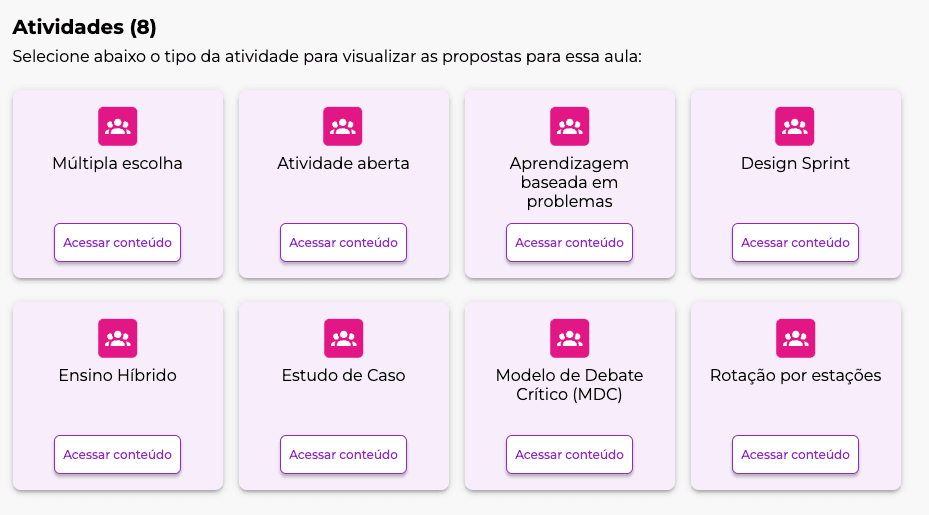
At AprendiZAP, our mission is to provide students in Brazilian public schools with a practical digital learning tool. As we examined the challenges facing education, we recognized the urgent need to foster autonomous, participatory learning—something that can be achieved through active learning methodologies.
In this context, our engineering team was challenged to create at least six active learning proposals for each of the 1,428 lessons available for the final years of Brazilian elementary school (Ensino Fundamental II). We also needed to organize a teacher review process to ensure the quality of the material produced.
Given the scale—more than 8,000 activities by the end of the project—creating everything manually would have been unfeasible. We therefore chose to use generative artificial intelligence. Testing began with ChatGPT, which showed promise, although it required refinement.
Because of the volume involved, we automated the process through the OpenAI API, which at the time used the gpt-3.5-turbo model. The API also allowed us to adjust parameters such as temperature, which influences how creative the responses are.
Prompt engineering
A prompt is the instruction given to the model. The quality of the generated responses depends directly on the quality of that instruction. During the first few weeks, we devoted significant effort to defining and refining the prompts used to generate the activities, combining techniques we had learned, qualitative analyses of test batches, and feedback from the model itself.
We also adjusted the temperature for each subject because we noticed that, in some cases, higher values produced results that were less grounded in reality.
The final prompt requested a teaching guide to help teachers make lessons more engaging, structured into six sections: context, lesson plan, pedagogical intent, assessment criteria, teacher actions, and student actions. Using each lesson's metadata, we identified 12 active learning methodologies to make the proposals more varied.
Keeping human review at the center
Given the amount of content generated, we needed a robust review strategy. The challenge was to present the material on a platform familiar to the teachers who would review it. We considered different CMSs, but chose Google Docs, which was already part of the team's routine.
Using the Google Drive and Google Docs APIs, we automated part of the process. The generated materials were converted into documents and stored in a shared folder. This allowed teachers to access, review, and edit the material, while also providing automatic backups and version history.
The reviewing teachers played a crucial role in assessing quality. To streamline the process, we established a simple code: ✅ marked files that had been reviewed and were ready; ❌ identified rejected proposals that needed adjustments or a different active learning methodology.
After the review, we used the Google Drive API again to extract only the approved files and incorporate them into the content database. The data team divided the texts into their respective sections. Bringing together different skill sets was essential to completing the project.
What we learned
Without AI, producing content at this scale would have been impractical. Prompt engineering, teacher review, and the Google Docs and Drive APIs all contributed to the result. The key was understanding how technology could support the process without losing sight of the ultimate goal: creating a useful learning experience for teachers and students.
Although artificial intelligence is powerful, it is a tool. We still rely on human judgment and experience to ensure that the generated content is high-quality and genuinely useful for teaching.